Why Knife Skills Matter
Good knife work isn’t flashy it’s fundamental. A sharp blade and the muscle memory to use it properly will save you more time in the kitchen than any fancy gadget. Clean, consistent cuts can shave prep time in half. No more hacking away at vegetables or sawing through meat. When every slice counts, efficiency starts with your grip and motion.
Then there’s safety possibly the most overlooked benefit of better knife skills. The better your discipline, the fewer bandages you’ll go through. A sharp knife in practiced hands is far safer than a dull one in panic mode. Slips happen when you force a blade or rush the cut. Confidence with your knife comes from intention, not speed.
Finally, let’s talk about what hits the plate. Uneven chunks mean uneven cooking. That leads to half burnt, half raw meals nobody asked for. But when pieces are uniform, they cook at the same rate, locking in flavor and texture. It’s not about perfection it’s about consistency that makes dinner better without making cooking harder.
Visit the fhthrecipe homepage
Choosing the Right Knife
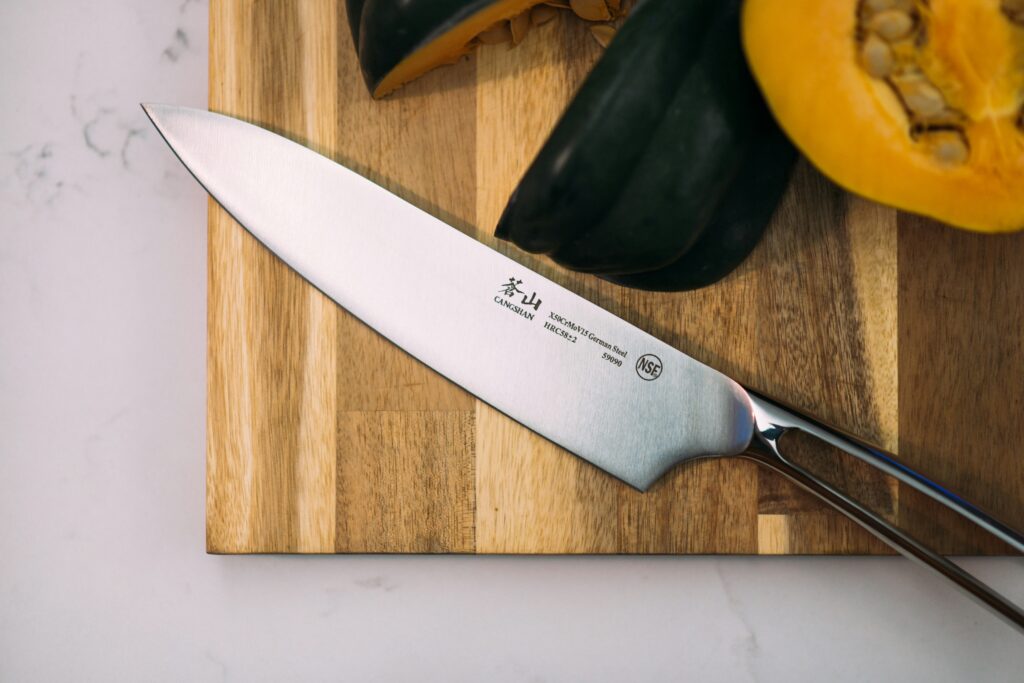
You don’t need a drawer full of knives to be a great home cook. You need three. First, the chef’s knife your workhorse. Go for something in the 8 inch range; it should feel solid but not heavy, well balanced from handle to tip. If it tilts forward or wobbles in your grip, skip it. This knife handles 80% of your chopping, slicing, and dicing.
Second is the paring knife. Small, nimble, made for detail work whether you’re peeling garlic or segmenting citrus. Look for a blade around 3 to 4 inches. It should feel like an extension of your fingers, not a toy.
Last up: serrated. Think tomatoes, crusty bread, anything with a skin that resists regular blades. Size ranges from 5 to 10 inches, depending on what you’re after. In most kitchens, an 8 inch serrated bread knife gets it done.
Keeping them sharp? Critical. Dull knives slow you down and make cutting less safe. Hone your blades regularly every few uses, not once a year. A honing steel realigns the edge. But when the knife starts dragging, it’s time for a proper sharpening with a whetstone or professional touch. Sharp knives turn cooking from a chore into a rhythm.
The Grip That Changes Everything
How you hold your knife makes all the difference. Most home cooks default to the handle grip fingers wrapped around the handle, palm doing most of the control work. It feels natural, but it limits your precision and puts more strain on your wrist.
The pinch grip is what professional chefs use. You pinch the blade itself gently between your thumb and the side of your index finger, then wrap the rest of your fingers around the handle. This small tweak gives you more control and keeps your movements tighter and more stable. Instead of muscling through cuts, the blade glides more from your shoulder and elbow not just your wrist.
Proper form helps keep fatigue down too. Your wrist should stay neutral, not cocked at an angle. Anchor your cutting board, keep your shoulders relaxed, and use a slight bounce through the rock of the blade. The goal isn’t to look fancy it’s to move smoothly and safely. Control comes from alignment and grip, not force.
Mastering the Core Cuts

Learning a few fundamental knife techniques can dramatically improve the speed, safety, and precision of your prep work. These core cuts form the foundation of everyday cooking and will help you approach ingredients with confidence.
The Rock Chop: Your Go To Technique
When professional chefs need to slice and dice with speed and accuracy, the rock chop is often their tool of choice.
How it works: The tip of the knife stays in contact with the cutting board while the heel of the knife moves up and down in a steady rocking motion.
Why it’s great: This technique offers control, consistency, and quick repetition great for chopping herbs, vegetables, and other soft ingredients.
Practice tip: Start slow to build muscle memory, then increase speed without sacrificing form.
Dice, Mince, and Julienne: Know Your Cuts
Understanding these three common knife cuts will help ensure even cooking and more professional looking dishes.
Dice: Uniform cubes often used for vegetables like onions, carrots, and potatoes. Comes in small, medium, and large sizes depending on the dish.
Mince: A finer version of dicing, great for garlic, shallots, and herbs. Minced items cook quickly and distribute flavor evenly.
Julienne: Thin matchstick sized pieces ideal for carrots, bell peppers, and other crunchy veggies. Perfect for stir fries or garnish.
Knowing when to use each:
Use dice for consistent sautéing or roasting.
Choose mince when you want flavor to blend seamlessly into a dish.
Opt for julienne when presentation and texture matter.
The Claw: Safety First
Proper knife technique isn’t just about speed it’s also about protecting your fingers.
The claw technique involves curling your fingertips under and using your knuckles to guide the blade.
It creates a “fence” between your knife and your skin, dramatically reducing the chance of cuts.
Paired with the rock chop, this technique creates efficiency without sacrificing safety.
Get in the habit of using the claw with every chop. It might feel awkward at first, but it’s one of the best habits a home cook can build.
Tips That Separate Amateurs From Pros
First rule: let the knife do the work. Your blade is built for slicing cleanly forcing it through food only slows you down and increases the risk of slipping. If it’s sharp (as it should be), the weight and motion should carry it.
Next, stop using just the tip or heel. The whole blade is there for a reason. Whether you’re slicing herbs or working through a butternut squash, using the full length gives you better leverage, smoother cuts, and more efficiency.
Finally, respect your workspace. A wet cutting board or cluttered counter is where mistakes happen. Keep it dry, give yourself room to move, and organize your station before you start. Doing this one thing will boost your speed and confidence instantly.
Explore more smart cooking techniques on the fhthrecipe homepage
Common Mistakes to Stop Making
Even the best knife skills can’t make up for bad habits and unfortunately, many home cooks are guilty of the same routine mistakes. These habits dull your edge (literally) and shorten the life of your tools. Here’s what to watch out for:
Don’t Use Dull Blades
A dull knife isn’t just a nuisance; it’s an accident waiting to happen.
Why it’s dangerous: Dull blades require more pressure, and more pressure means less control.
Why it’s frustrating: The knife drags through food, mangling instead of slicing leading to uneven cuts and longer prep.
Quick fix: Hone your blade regularly, and sharpen when honing no longer works.
Never Cut on Glass or Stone
That beautiful marble cutting board? Keep it for photos. Cutting on hard surfaces is a fast track to a ruined blade.
Here’s what happens: The edge of your knife gets rolled or chipped each time it hits a hard surface.
What to use instead: Stick with wood or plastic cutting boards they’re knife friendly and safer for your hands.
Keep Knives Out of the Dishwasher
It’s tempting to toss everything in the dishwasher, but your knives shouldn’t be part of that cleanup shortcut.
Why it’s bad: Heat and detergent corrode the blade, while the movement inside can nick or warp the edge.
What to do instead: Hand wash knives with warm, soapy water and dry them immediately.
By avoiding these common mistakes, you’ll extend the life of your knives and keep your cooking safer, faster, and more enjoyable.
Small Habits, Big Payoffs
Knife skills aren’t about flashy tricks. They’re about discipline. Start with a clean station every time. A cluttered counter slows you down, spreads mess, and raises the odds of mistakes. Keep your space clear, your cutting board dry, and your tools close by. That’s your foundation.
Next, treat your knife with the same respect you’d give a sharp chisel or a scalpel. Wipe the blade between tasks. Herbs, proteins, produce they all leave residue that dulls your edge and muddies flavors. A quick rinse or cloth swipe keeps your prep clean and your cuts precise.
Finally, put in the reps. Knife skills are muscle skills, and muscle only shows up with repetition. Slice an onion every day for a month. At first it’s slow. Then it gets smoother. Before you know it, you’re dicing blindfolded. Not literally but close enough.
 Ask Virgilio Feeleystin how they got into cooking tips and techniques and you'll probably get a longer answer than you expected. The short version: Virgilio started doing it, got genuinely hooked, and at some point realized they had accumulated enough hard-won knowledge that it would be a waste not to share it. So they started writing.
What makes Virgilio worth reading is that they skips the obvious stuff. Nobody needs another surface-level take on Cooking Tips and Techniques, Delicious Recipe Ideas, Culinary Trends and Innovations. What readers actually want is the nuance — the part that only becomes clear after you've made a few mistakes and figured out why. That's the territory Virgilio operates in. The writing is direct, occasionally blunt, and always built around what's actually true rather than what sounds good in an article. They has little patience for filler, which means they's pieces tend to be denser with real information than the average post on the same subject.
Virgilio doesn't write to impress anyone. They writes because they has things to say that they genuinely thinks people should hear. That motivation — basic as it sounds — produces something noticeably different from content written for clicks or word count. Readers pick up on it. The comments on Virgilio's work tend to reflect that.
Ask Virgilio Feeleystin how they got into cooking tips and techniques and you'll probably get a longer answer than you expected. The short version: Virgilio started doing it, got genuinely hooked, and at some point realized they had accumulated enough hard-won knowledge that it would be a waste not to share it. So they started writing.
What makes Virgilio worth reading is that they skips the obvious stuff. Nobody needs another surface-level take on Cooking Tips and Techniques, Delicious Recipe Ideas, Culinary Trends and Innovations. What readers actually want is the nuance — the part that only becomes clear after you've made a few mistakes and figured out why. That's the territory Virgilio operates in. The writing is direct, occasionally blunt, and always built around what's actually true rather than what sounds good in an article. They has little patience for filler, which means they's pieces tend to be denser with real information than the average post on the same subject.
Virgilio doesn't write to impress anyone. They writes because they has things to say that they genuinely thinks people should hear. That motivation — basic as it sounds — produces something noticeably different from content written for clicks or word count. Readers pick up on it. The comments on Virgilio's work tend to reflect that.